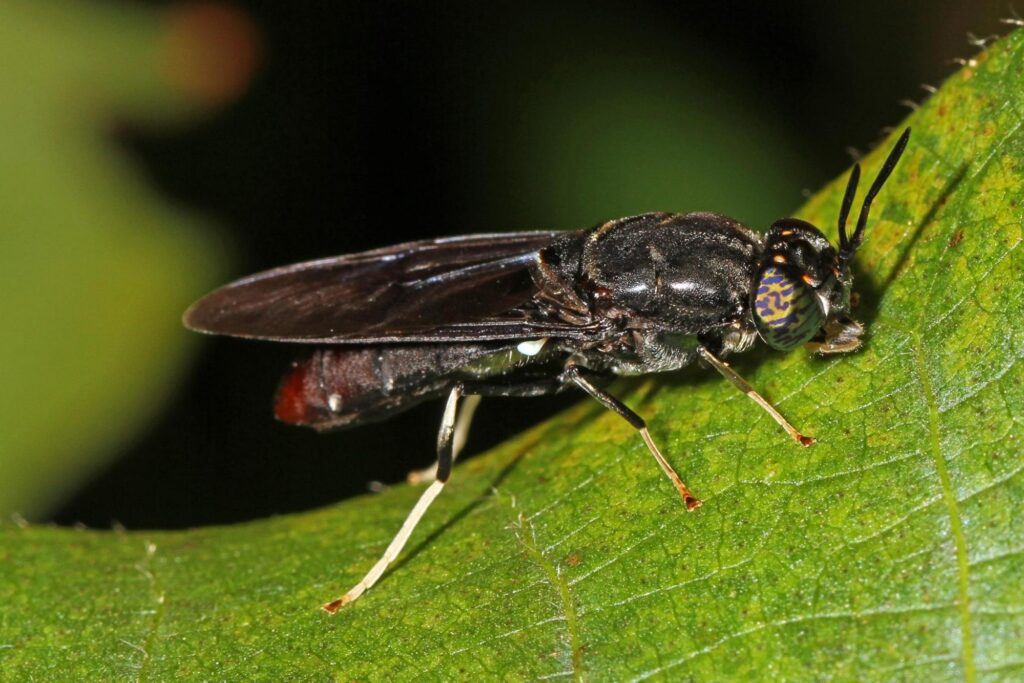
 Figure 1. Black soldier fly (Hermetia illucens). Photo: Judy Gallagher, Wikimedia Commons (CC BY 2.0).
Insect farming could become an important component of the bioeconomy by linking waste management, food security, and lower-impact production. Farmed insects convert low-value materials, including fruit and vegetable residues, brewery and cereal by-products, and selected manures, into concentrated biomass while using comparatively little land. The resulting protein and fat can serve aquaculture, livestock, pet food, and, where approved, human food. Insect protein may also replace some fishmeal, reducing pressure on wild fish. Frass, a mixture of excreta and residual substrate, can be sold as fertilizer or a soil amendment, linking food-system wastes to crop production.
Three species define most commercial activity. The black soldier fly, Hermetia illucens, is well suited to wet and heterogeneous residues. Its rapidly growing larvae contain roughly 40 percent protein and 30 percent fat on a dry-matter basis and can be processed into dried larvae, protein meal, and oil. Lauric-acid-rich lipids have antimicrobial properties and possible uses in animal health, cosmetics, pharmaceuticals, and fuels. Larvae also produce antimicrobial peptides, while shells and exoskeletons can supply chitin and chitosan for biomedical, agricultural, and water-treatment applications. Because facilities may generate roughly twice as much frass as insect biomass, fertilizer can be an essential revenue stream.
The yellow mealworm, Tenebrio molitor, thrives on dry, cereal-based substrates and is commonly raised in vertically stacked trays. Mealworms grow more slowly than black soldier fly larvae, but production is relatively predictable and space-efficient. Their biomass generally contains 45–55 percent protein and 25–35 percent fat. They can be sold whole or processed into powders and meals for specialty feed and human foods. Unsaturated lipids may be used in food, feed, or biodiesel; chitin and antimicrobial peptides may serve agricultural or biomedical markets; and dry frass can amend soil. Mealworm-associated microbes may also help degrade difficult wastes, although safety controls remain necessary.
The house cricket, Acheta domesticus, is the most food-oriented species. Crickets contain about 60–70 percent protein and 10–20 percent fat on a dry-matter basis, with a favorable amino-acid profile. They are suitable for powders, flours, protein bars, pasta, baked products, aquafeed, and pet food. Their proteins can yield bioactive peptides, while chitin, lipids, and frass provide additional products. Cricket farming is demanding: temperature, humidity, density, sanitation, and airflow must be controlled. Cannibalism can reduce output, and viral diseases, particularly Acheta domesticus densovirus, can cause severe losses. High protein content alone therefore does not ensure reliable production or profitability.
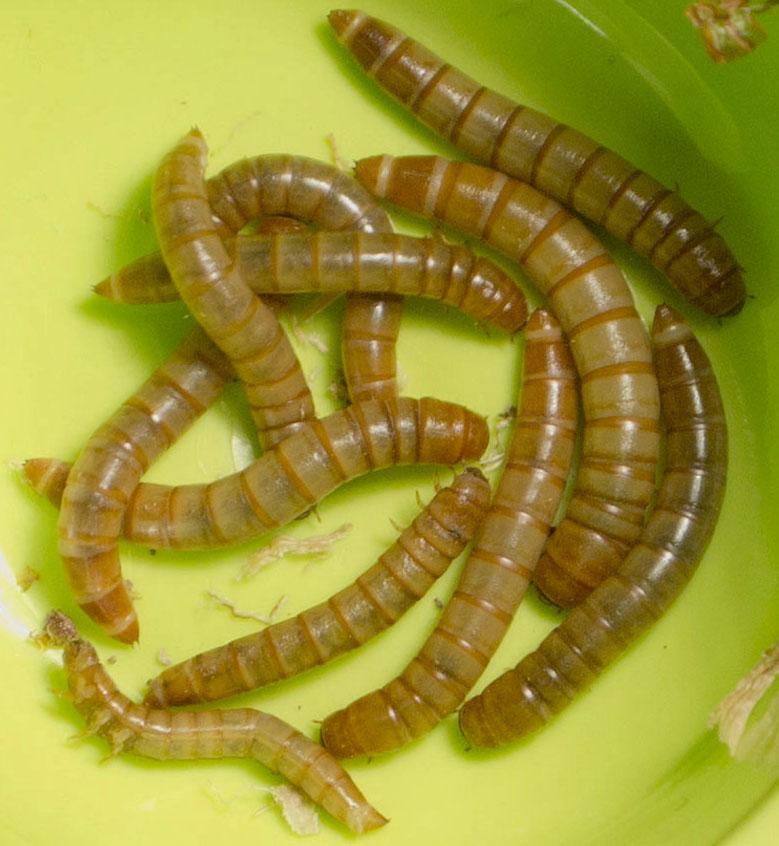 Figure 2. Yellow mealworm larvae (Tenebrio molitor). Photo: Tiia Monto, Wikimedia Commons (CC BY-SA 3.0).
The supply chain begins with feedstock procurement and characterization. Producers must secure sufficient residues while controlling moisture, nutrients, pathogens, heavy metals, pesticides, and other contaminants. Breeding, rearing, environmental control, harvesting, killing, drying, and stabilization follow. Biomass may be sold whole or separated into protein, oil, peptides, and chitin, while frass is treated. Commercialization also requires standardized grades, safety testing, traceability, transport, regulatory approval, buyer contracts, marketing, and consumer education. Weakness at any stage can erase biological efficiency.
Profitability remains the principal challenge. Insect protein must compete with fishmeal and soybean meal, while facilities face capital, labor, energy, feedstock, disease-control, and processing costs. The strongest model is therefore an insect biorefinery rather than a single-product factory. Frass can establish an early revenue floor; protein and oil can serve feed markets; and chitin, peptides, or specialty lipids may capture higher margins. Firms still lack sufficient plant-level evidence on yields, recovery rates, energy use, disease losses, costs, and realized prices. Regulation is fragmented, particularly for feedstocks, product approvals, and frass treatment. Transparent techno-economic and life-cycle data are needed for credible investment decisions.
Market estimates should be treated as order-of-magnitude indicators. If each published range is modeled as a uniform uncertainty interval, the midpoint is expected annual revenue and the range width divided by the square root of twelve is an indicative standard deviation. On that basis, the 2025 global market for insect protein and whole-insect feed had an expected value of about $1.25 billion with a standard deviation of $0.32 billion; edible insects, $1.65 billion with a standard deviation of $0.38 billion; and frass, $0.30 billion with a standard deviation of $0.12 billion. Projections for approximately 2032–2035 imply $5.0 billion with a standard deviation of $1.73 billion for insect protein, $4.0 billion with a standard deviation of $1.15 billion for edible insects, and $0.75 billion with a standard deviation of $0.03 billion for frass. Applying the same method to the $1–2 billion incumbent-market range for insect-derived chitin and antimicrobial peptides gives an indicative addressable value of $1.50 billion with a standard deviation of $0.29 billion for each category. These are opportunities, not guaranteed sales.
A more optimistic earnings path is plausible only under specific enabling actions. Intensive research could improve feed conversion, growth, disease resistance, automation, product consistency, safety validation, and recovery of high-value compounds. Clearer and less restrictive regulation could expand safe feedstocks, shorten approvals, harmonize standards, and reduce entry costs. Public-private pilot plants, shared testing facilities, purchase agreements, and partnerships with feed, food, fertilizer, cosmetic, and pharmaceutical companies could accelerate scale-up. Under these conditions, the combined annual market for insect protein, edible insects, frass, chitin, antimicrobial peptides, and specialty lipids could plausibly approach $15–20 billion by the mid-2030s. Longer-term substitution into fishmeal, alternative proteins, chitosan, biofertilizers, and specialty biochemicals could support an economy in the several-tens-of-billions range.
Berkeley is well positioned to organize this field through a cross-campus research and commercialization program. A Circular Insect Bioeconomy Initiative could integrate insect biology and disease, nutrition, life-cycle assessment, waste engineering, soil science, economics, consumer behavior, and regulation. Pilot facilities could test local residues, compare the three species, and produce transparent technical, economic, and environmental data. The Energy & Biosciences Institute is a logical home because its portfolio includes circularity and nature-based solutions, it works through public-private partnerships, and it can connect insect farming to a broader Berkeley bioeconomy hub. Berkeley could convene companies, waste managers, investors, and regulators around shared standards and demonstrations, making insect farming a model for turning waste into food, materials, and environmental value.
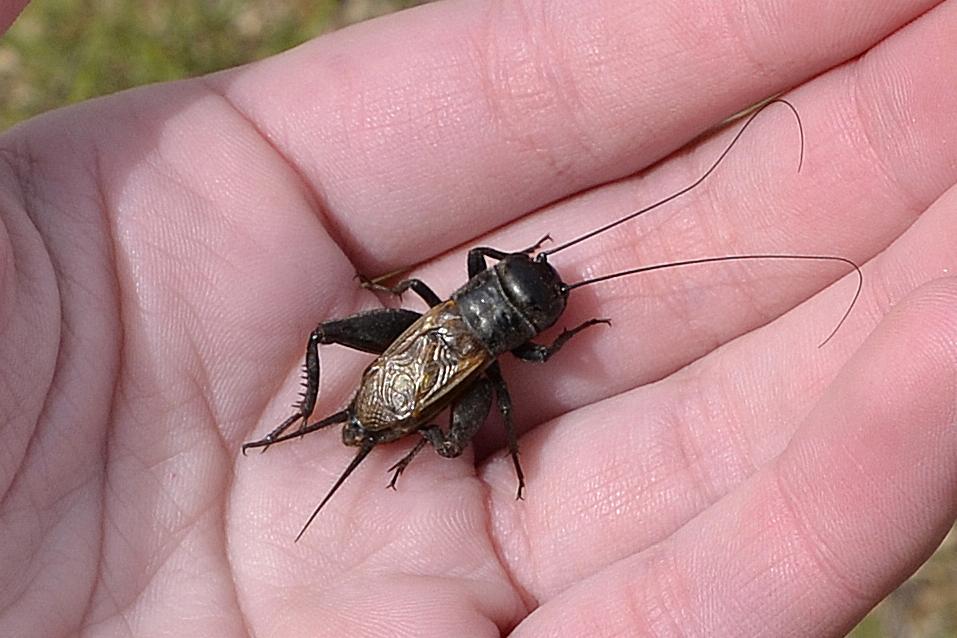 Figure 3. House cricket (Acheta domesticus). Photo: Kiloueka, Wikimedia Commons (CC0 1.0).
¹Much of the findings of the paper are outcomes of joint research with Jeffery K. Tomberlin, Chelsea Miranda, Erin Harris More details are in “Applications of insect-farming residues for closing the circle of circular bioeconomy” by Jeffery K. Tomberlin, Chelsea Miranda, Erin Harris, and David Zilberman in the forthcoming
“Integrated Biorefineries for Emerging Food Sources: Technologies, Application, and Circularity”
Edited by Marios Psarianos, Oliver Schluter, Onder Altuntas, Hülya Altuntas, Nader Marzban, Giacomo Rossi